Mud Tubes on Foundations or Other Surfaces
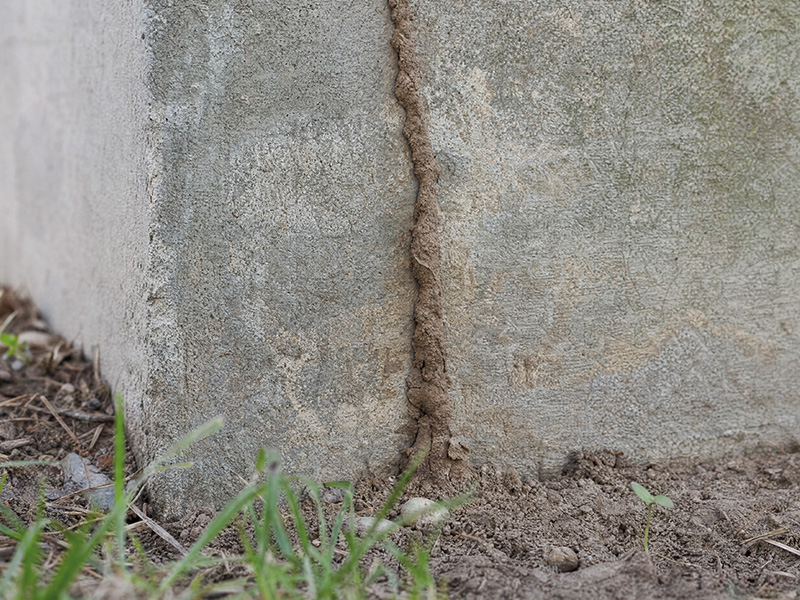
Mud tubes are one of the most recognizable signs of subterranean termite activity.
Subterranean termites build these narrow tubes from soil and other material to travel between the ground and a food source while helping protect them from dry, exposed conditions.
Homeowners may notice them on foundation walls, crawl space walls or piers, basement walls, or other surfaces near where the structure meets the ground.
A mud tube can indicate current or previous termite activity. It does not necessarily show how extensive the problem is or whether termites are still using that particular tube.
Shed Wings Around Windows or Doors
Termite swarmers leave established colonies to reproduce and form new colonies. After swarming, they shed their wings.
Those wings may be found around windowsills, doors, light fixtures, or other areas where swarmers were drawn toward light.
Finding shed wings indoors can be an important sign of termite activity in or very close to the structure.
Swarmers are especially noticeable during certain times of year in Virginia and North Carolina. For more details about when they appear, what they look like, and how they differ from flying ants, see our guide to termite swarmers in Virginia and North Carolina.
Wood That Appears Damaged or Weakened
Subterranean termites feed behind the outer layer of wood, allowing the surface to appear intact even when damage is present underneath.
Homeowners may notice wood that appears unusually soft, damaged, thin, or weakened in an area they regularly see or use.
When subterranean termite damage is exposed, the wood may contain hollowed-out galleries that follow the grain. Soil or mud can also be present within those galleries.
Subterranean termites can feed in concealed areas for months or years before damage becomes noticeable. Serious structural damage typically develops over years of ongoing feeding, but termite activity can be present well before there is an obvious problem in the living space.
Wood damage alone does not confirm the presence of termites. Moisture, decay, and other wood-destroying insects can cause similar problems, which is why professional identification is important.
Damage Around Floors, Trim, or Structural Wood
As termite damage progresses, changes can sometimes become noticeable in parts of the home.
These may include:
- Flooring that feels softer or less solid in one area
- Trim that appears damaged or unusually fragile
- Blistered or uneven areas on wood surfaces
- Visible damage to accessible structural wood
- A door or window that begins sticking or fitting differently
These conditions are not unique to termites. Humidity, moisture, wood decay, settling, and other structural issues can cause similar changes. A sticking door, soft floor, or damaged piece of trim by itself is not enough to determine whether termites are responsible.
Live Termites
Homeowners occasionally encounter live subterranean termites when activity is exposed during repairs, remodeling, landscaping, or other work around the home.
They may be seen in damaged wood, within an exposed mud tube, or in disturbed soil near the foundation or other areas where termites have been foraging.
Subterranean termite workers are small, pale, soft-bodied insects and are sometimes mistaken for "white ants." Workers normally remain concealed in soil, mud tubes, and wood rather than moving around in the open.
Soldiers have larger, darker heads and noticeable jaws, while reproductive termites are darker and develop wings for swarming.
Because termites can easily be confused with ants and other insects, our termite identification guide provides more detail about their appearance.
How Do I Know If I Have Termites?
No single sign tells a homeowner everything about a possible termite problem. Even stronger evidence does not necessarily reveal whether activity is current or how much of the structure is affected.
If you notice something that could indicate termites, Four Seasons Pest Control can determine whether termites are present and recommend termite control if treatment is needed.
Subterranean Termites in Virginia and North Carolina
Subterranean termites are an established structural pest throughout Virginia and North Carolina.
Although termite swarmers are especially noticeable during spring in this region, colonies can remain active throughout the year when conditions allow.
Four Seasons Pest Control has served homes and businesses across Virginia and North Carolina since 1998, including communities such as Danville, South Boston, and Reidsville. Our team brings decades of experience dealing with termite problems throughout our Virginia and North Carolina service area.
Does Visible Termite Damage Mean the Infestation Is Active?
Not necessarily.
Old termite damage can remain after activity has stopped, and an abandoned mud tube can remain visible even if termites are no longer using it.
The opposite is also possible. Subterranean termites can be active inside a structure without producing obvious signs in areas homeowners normally see.
That is one reason visible evidence alone cannot determine whether a home currently has an active termite infestation.
Protect Your Home From Termites With Four Seasons
If you've noticed mud tubes, shed wings, suspicious wood damage, or insects you think may be termites, contact Four Seasons Pest Control.
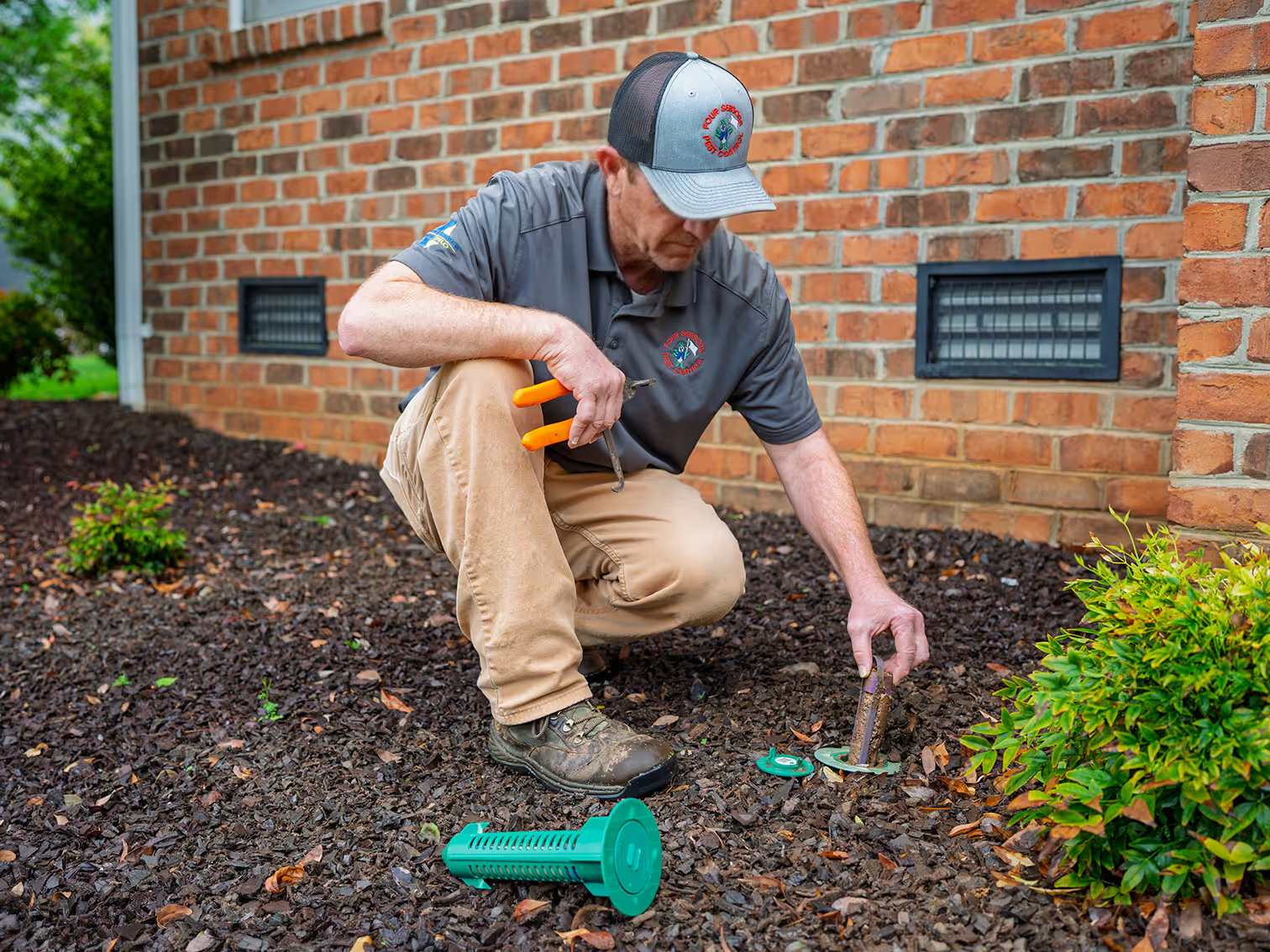
We've been protecting homes and businesses in Virginia and North Carolina since 1998. As a Certified Sentricon Specialist®, our team can confirm the extent of termite activity and recommend the right termite control approach when treatment is needed.
Contact Four Seasons Pest Control to get started.