How Stinging Insect Colonies Build Up Over Summer
Every stinging insect colony starts with a single queen. She emerges from dormancy in spring, finds a sheltered spot, and begins building a small nest. For the first few weeks, she does everything herself — constructing the nest, laying eggs, and foraging for food.
Once the first batch of eggs hatches and the new workers mature, things speed up fast. Workers take over nest-building and foraging while the queen focuses entirely on laying more eggs. By early summer, most colonies are growing rapidly, with new workers emerging regularly and the nest expanding to accommodate them.
This is the period when many nests are still small enough to go unnoticed. A paper wasp nest under an eave or a yellow jacket colony just getting started in the ground may only have a handful of insects. A few weeks later, the same colony can look very different.
Where Stinging Insects Build Their Nests
Part of what makes stinging insects so common around homes is that they aren't picky about where they nest — as long as the spot is protected from rain and wind. During routine service visits, our technicians find nests in many of the same areas across our Virginia and North Carolina service area.
Under Eaves and Soffits
One of the most common spots. The overhang protects the nest from rain, and the height keeps it away from most foot traffic. Paper wasps especially like building their small, open-celled nests in these areas.
Porch Ceilings and Covered Patios
Covered areas that stay dry and out of direct sunlight are ideal. Nests tucked under a porch ceiling can go unnoticed for weeks if you're not looking up.
Inside Shutters and Behind Trim
Decorative shutters, window trim, and siding gaps give stinging insects a sheltered pocket to build in. In Danville and across Southside Virginia, older homes with wooden shutters and detailed trim are frequent nesting spots that our technicians check during service visits.
Sheds, Garages, and Outbuildings
These structures often have gaps around doors, vents, and rooflines that let wasps right in. Around Moneta, Chatham, and the more rural parts of our service area, outbuildings and storage sheds are some of the most common nesting locations we find.
In the Ground
Yellow jackets are one of the few stinging insects that commonly nest underground. They take over old rodent burrows, gaps in retaining walls, or openings around tree roots. Ground nests are especially dangerous because they're easy to step on or run over with a mower without realizing they're there.
Playground Equipment and Outdoor Furniture
Swing set legs, patio umbrella poles, and even grill covers can become nesting spots. Families often discover nests on backyard play equipment once outdoor activity picks up for the season.
Dock and Boathouse Structures
At Smith Mountain Lake, docks, boathouses, and waterfront storage areas attract stinging insects throughout the warmer months. The combination of sheltered spaces and proximity to water makes these spots appealing for nest-building.
We've also found bald-faced hornet nests hanging from tree branches and tucked into wooded edges behind lakefront properties where mature trees provide plenty of cover.
If you spot stinging insects flying repeatedly to and from the same location, there's likely a nest building in that area. Give Four Seasons Pest Control a call, and we'll come take a look.
Which Stinging Insects Are Common in Virginia and North Carolina?
Several species build nests around homes in our service area. Each one has different nesting habits and behaviors, but all are covered under Four Seasons' home pest control plans.
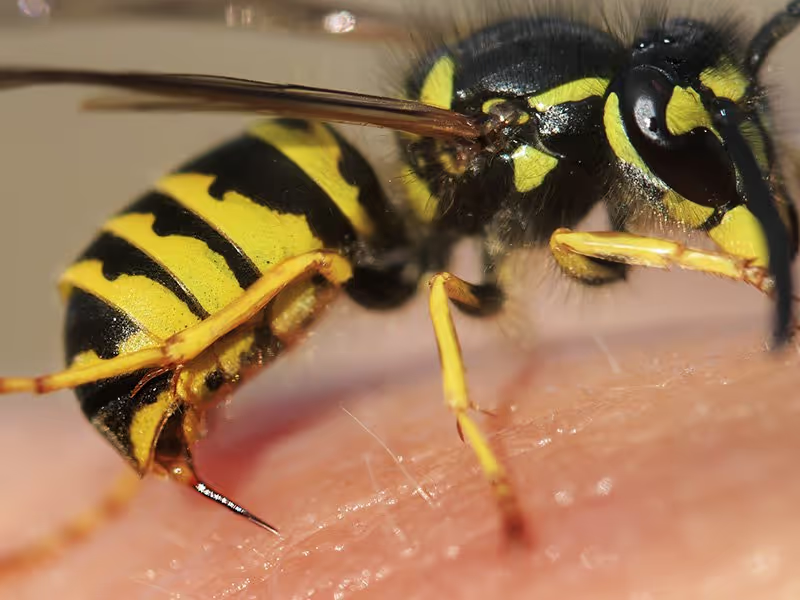
Yellow jackets are among the most common stinging insects we're called to handle. They build nests both in the ground and in structural voids like wall cavities. Colonies can grow to several thousand workers by late summer, and they become increasingly defensive as the season progresses.
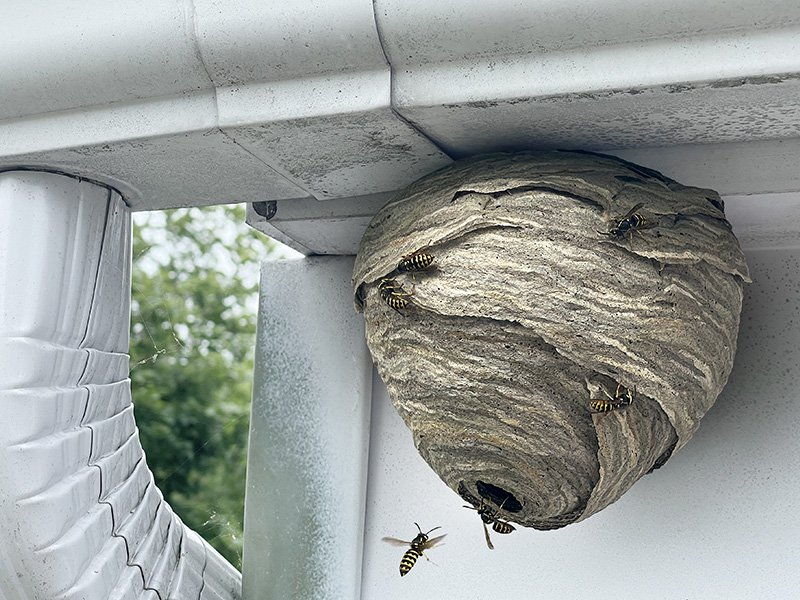
Bald-faced hornets build large, enclosed paper nests in trees, shrubs, and along building eaves. Their nests can grow large by summer, sometimes reaching the size of a basketball. They'll defend the nest aggressively if it's disturbed.
European paper wasps build their distinctive open-celled paper nests under eaves, porch ceilings, deck railings, shutters, and other protected areas around homes. They're generally less defensive than yellow jackets but will protect their nest if threatened.
What Happens When a Nest Keeps Growing
Early nests are easy to overlook. A small paper wasp nest under an eave or a yellow jacket colony just getting started in the ground may not seem like much of a concern.
By midsummer, that same colony can contain hundreds of workers. By late summer, some yellow jacket colonies can reach into the thousands. More insects mean more activity around the home and a greater chance of accidental encounters.
That's one reason our technicians keep an eye out for nest activity during routine service visits. Many of the nests we remove are found before homeowners even realize they're there. Catching a nest early is usually much easier than dealing with a fully developed colony later in the season.
How Four Seasons Handles Stinging Insect Nests
Bee and wasp nest removal is included in all of our home pest control plans. That means if a nest shows up between visits, you're covered — give us a call and we'll come out to take care of it.
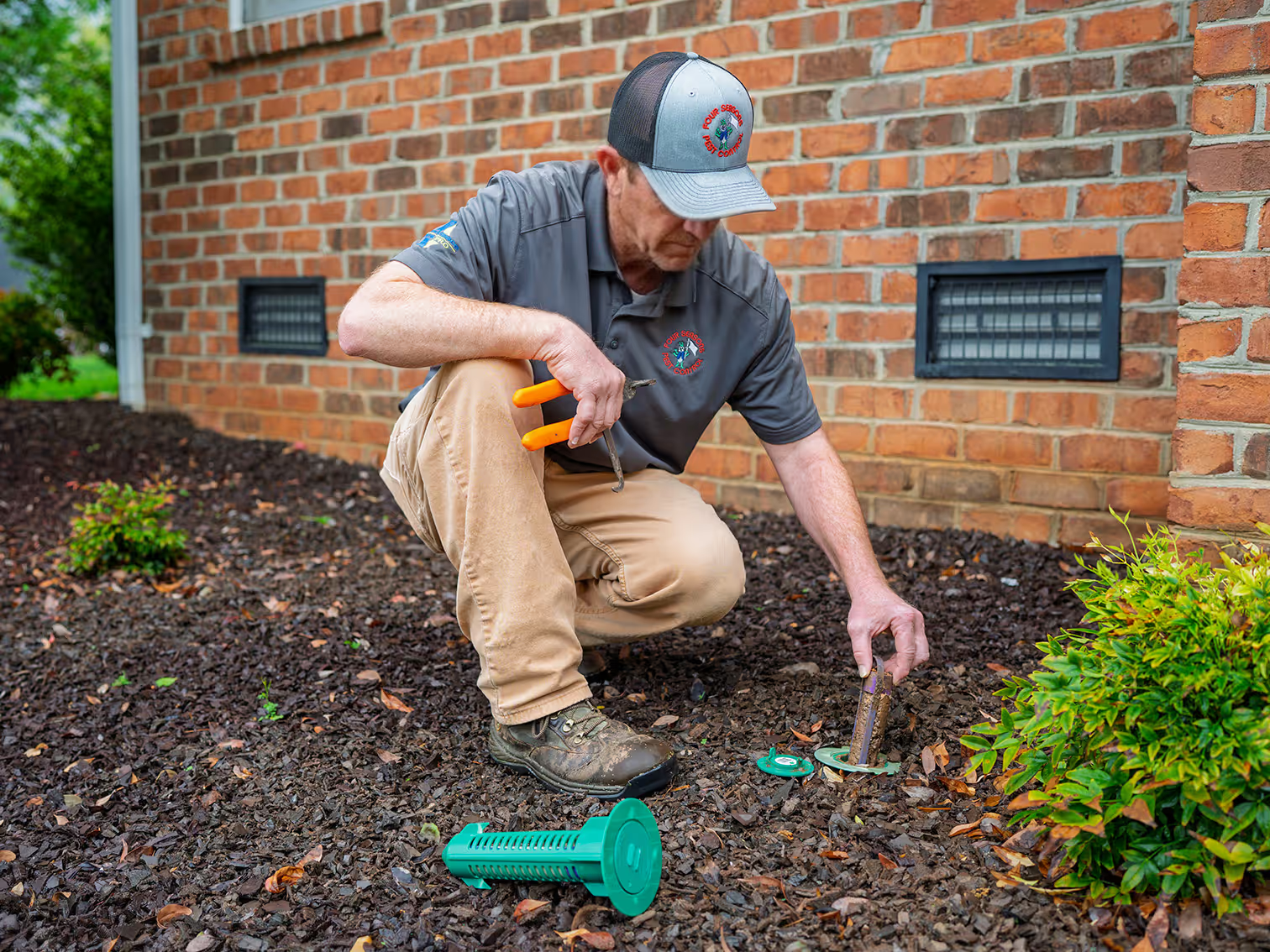
During every routine visit, our technicians inspect the exterior of your home for new nest activity. If they find one, they'll remove it on the spot. If a larger nest has built up in a hard-to-reach area — like inside a wall void or high under a roofline — we'll schedule a targeted follow-up to handle it properly.
We've been helping homeowners since 1998; our technicians know where nests tend to show up around homes in our region and what it takes to address them before they become a bigger issue.
Found a Nest? Don't Wait
If you've already spotted a nest on or near your home, the sooner it's addressed, the better. Contact Four Seasons Pest Control or give us a call, and we'll assess the situation, remove the nest, and make sure the area is clear.
Whether you're on a plan and want us to handle a nest between visits, or you're dealing with stinging insects for the first time, our team is here to help.
FAQs About Stinging Insect Nests
Can stinging insects damage my home?
Yellow jackets and other stinging insects that nest inside wall cavities can create issues inside structural voids over time. While most nesting damage is minor, nests in walls, attics, or other enclosed spaces should be addressed before they escalate into larger problems.
What should I do if I get stung?
For most people, a sting causes temporary pain, redness, and swelling. Clean the area and apply ice to reduce swelling. If you experience difficulty breathing, throat or facial swelling, dizziness, or other concerning symptoms, seek emergency medical care immediately, as these may be signs of a severe allergic reaction.
Do stinging insects reuse old nests?
Most species build new nests each year. Old nests are typically abandoned after the first hard frost. However, queens often return to the same types of protected locations, which is why the same areas around a home may see nesting activity year after year.
Why do I suddenly see more wasps in late summer?
Late summer is when most colonies are at their largest. More workers are actively searching for food, and natural food sources begin to decline. That's why homeowners often notice increased activity around patios, trash cans, outdoor gatherings, and pet food areas during August and September.
How can I tell the difference between a bee and a wasp?
Bees are generally rounder and fuzzier, while wasps have smooth, slender bodies with narrow waists. Bees tend to be less aggressive and typically sting only once, while wasps can sting multiple times. If you're not sure what you're looking at, our pest identification guides can help.
Protect Your Home and Family From Stinging Insect Nests
Don't wait until a small nest becomes a bigger problem. Four Seasons Pest Control includes bee and wasp nest removal in every home pest control plan, helping homeowners stay ahead of stinging insect activity throughout the season. Request a free quote to get started.