What Changes Inside a Wasp Colony in Late Summer?
Most social-wasp colonies begin with a single queen in the spring. She builds a small nest, lays the first eggs, and raises the initial group of workers herself.
Once those workers mature, they take over most of the colony’s daily work. They enlarge the nest, defend it, and hunt caterpillars, flies, spiders, and other insects to feed the developing larvae.
That need for protein helps keep workers busy throughout the early part of the season.
As the colony grows and the number of developing larvae declines later in the summer, it needs less protein. More workers then turn their attention to sugary foods that fuel adult wasps, including ripe fruit, spilled drinks, nectar, and food left outdoors.
At the same time, the colony may contain hundreds or even thousands of workers, depending on the species and the size of the nest.
That combination increases the number of wasps in the landscape and brings some of them into closer contact with people.
Yellow Jackets Cause Most Cookout Problems
Not every wasp behaves the same way in August.
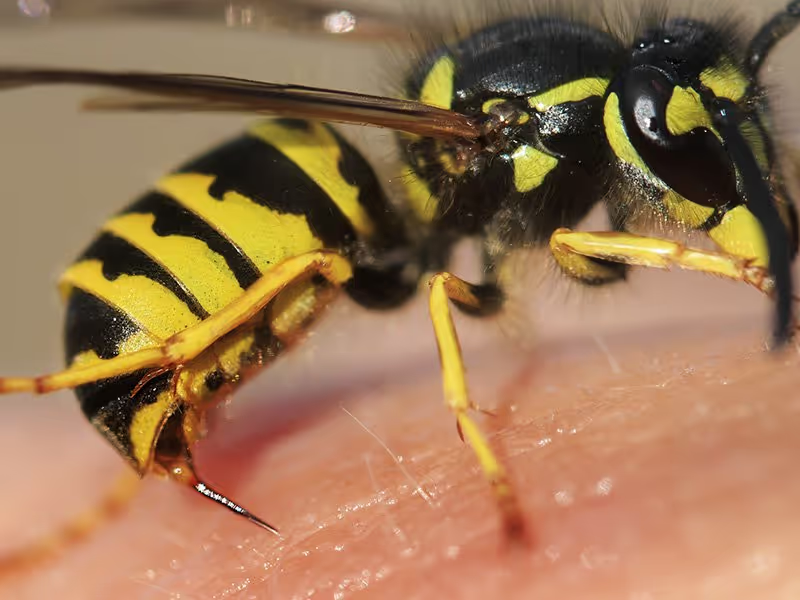
Yellow jackets are usually responsible for the insects persistently circling soda cans, outdoor meals, trash cans, and other food left outside. Some species become aggressive scavengers in late summer and fall, particularly when natural food becomes harder to find.
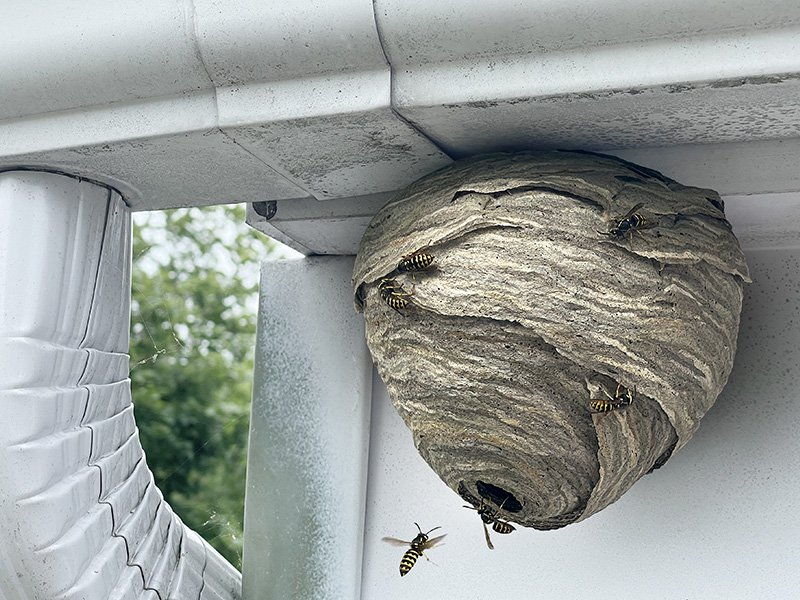
Paper wasps, including European paper wasps, and bald-faced hornets also have larger colonies by this point in the season, but they are not as likely to hover around your plate. They are more likely to become a problem when someone gets too close to the nest.
A paper-wasp nest above a doorway or a bald-faced hornet nest in a tree may remain unnoticed until someone walks too close, trims a shrub, opens a gate, or disturbs the structure holding it.
So while homeowners often group all of these insects together as wasps, the reason for the encounter can be different:
- Yellow jackets are more likely to approach food and drinks.
- Paper wasps are more likely to sting when a nest near the home is disturbed.
- Bald-faced hornets can respond aggressively when people or equipment get too close to their enclosed aerial nests.
Why the Same Nest Feels More Dangerous in August
Colony size is one of the biggest reasons a late-summer nest poses more risk.
A small paper-wasp nest under an eave in May might hold only a queen and a few workers. A mature yellow-jacket colony may contain hundreds or even thousands of workers later in the season.
Many social wasps can also sting repeatedly. When a large nest is disturbed, the response may involve far more insects than a homeowner expects.
Nest location adds to the risk. Late-summer nests are often found in places people pass or work around every day, including:
- Inside soffits or wall voids
- Behind siding or shutters
- Under deck boards
- Above porch ceilings
- Inside sheds or outbuildings
- In meter boxes
- Beneath shrubs
- In old rodent burrows or other underground cavities
Ground nests are especially easy to miss. A lawn mower, string trimmer, curious pet, or heavy footsteps near the entrance can trigger defensive activity before anyone realizes a nest is there.
Our guide on where wasps, hornets, and yellow jackets nest covers more areas to watch around your property.
How to Tell Whether a Nest Is Nearby
Seeing one wasp around flowers or an outdoor drink does not necessarily mean a nest is on your property. Wasps can travel well beyond the immediate area while foraging.
A repeated flight line is a more useful clue.
Watch for several insects following the same path into and out of:
- A gap beneath siding
- A soffit seam
- A crawl-space vent
- A hole in the lawn
- An opening beneath a deck
- A shed wall
- A crack around a utility line
You may also see the number of insects entering the opening increase as the day warms.
Paper wasps sometimes scrape weathered wood from fences, railings, or outdoor furniture. They mix those fibers with saliva to make the paper used in their nests, so shallow scrape marks accompanied by regular wasp activity can provide another clue.
A large colony inside a wall or ceiling void may occasionally produce faint buzzing or rustling sounds. Do not press on the wall or seal the opening to investigate.
What Can You Do About Wasps in the Yard?
You can make outdoor gathering areas less attractive to foraging yellow jackets.
Keep trash cans covered and rinse away sugary spills. Pick up fallen fruit, bring pet bowls indoors between meals, and keep food and drinks covered while you are outside.
Check cans, bottles, and cups before taking a drink. A yellow jacket can crawl inside an open container without being noticed.
These steps can reduce activity around the areas you use, but they will not eliminate a colony nesting nearby.
If several wasps are entering the same hole or structural opening, avoid mowing, trimming, digging, sealing the opening, or placing ladders near the area. Late-summer colonies can be large, and nests inside walls, soffits, or underground cavities are difficult to reach without disturbing the insects.
Wasp Nest Removal Included in Our Residential Pest Control
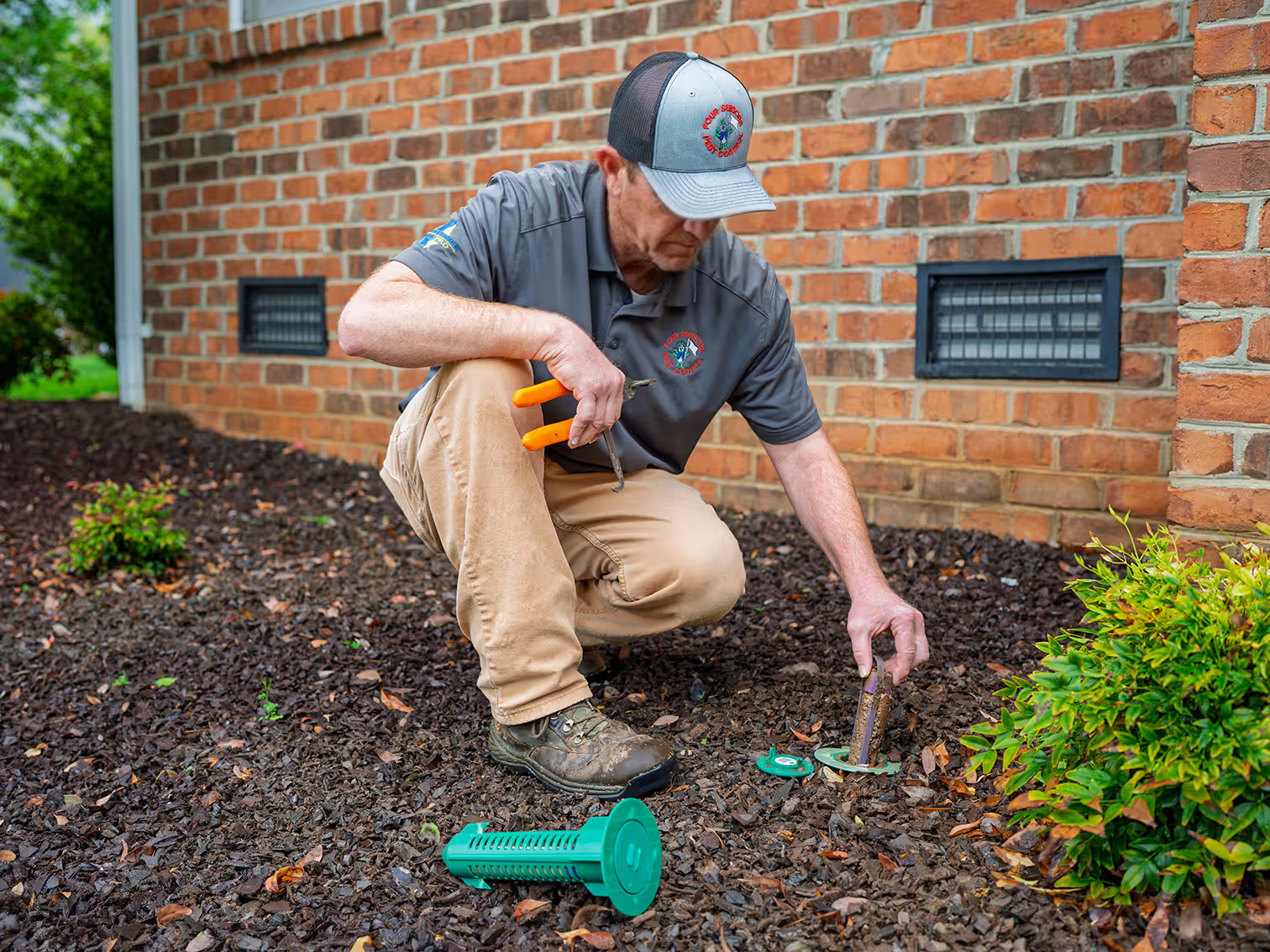
Four Seasons’ residential pest control plans do more than remove the wasp nest you're dealing with. Quarterly pest control service helps protect your home from a wide range of common pests year-round, and technicians remove visible bee and wasp nests they find during scheduled visits.
If a covered pest problem appears between regularly scheduled visits, you do not have to start over or pay for another treatment. Four Seasons will return to address it at no additional cost.
Four Seasons serves homeowners throughout our Virginia and North Carolina service area, including Danville, Smith Mountain Lake, Reidsville, and surrounding communities.
Frequently Asked Questions
Do wasps sting more people in late summer?
Sting encounters often become more common because colonies are larger and more insects are active around the property. Yellow jackets also spend more time scavenging around drinks, food, trash cans, and other areas where people gather.
Why does a yellow jacket keep hovering around me?
It may be investigating food, a sweet drink, trash, ripe fruit, or another odor nearby. Repeated hovering can also be defensive if you are close to a nest. Avoid swatting at it and move away calmly.
Are yellow jackets more aggressive than paper wasps?
Yellow jackets are more likely to approach food, drinks, and trash, especially later in the summer. Paper wasps are generally less interested in outdoor meals but may sting when someone gets too close to their nest.
Get Help With a Wasp Nest
If wasps are making it hard to enjoy your property, Four Seasons Pest Control can help.
Call us or request a wasp control quote today.