Why do spiders come inside during summer?
They follow insect activity. As temperatures and humidity rise across Virginia and North Carolina, insect populations increase around homes. More insects create more feeding opportunities for spiders, leading to more webs and more spider sightings around the property.
Spiders aren't moving indoors because they're trying to cool off. They're following their food.
It All Starts With What Spiders Eat
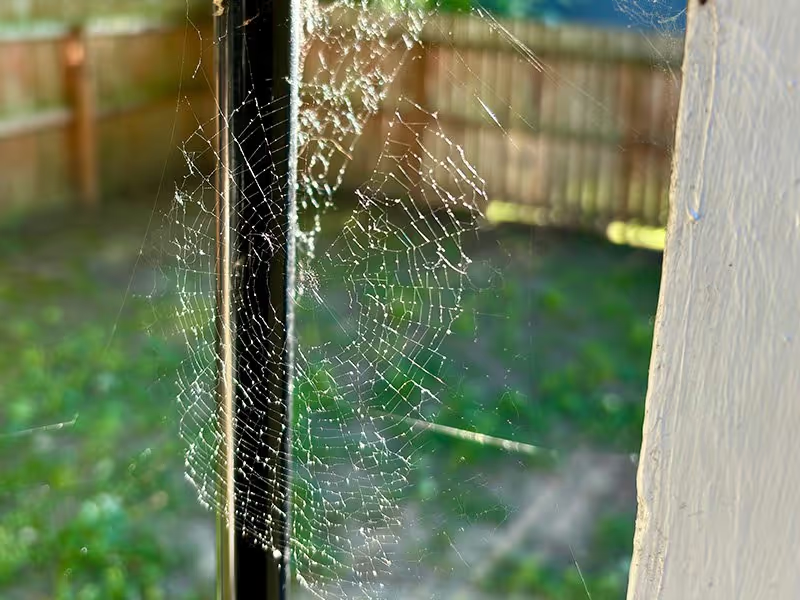
Spiders eat insects. That's their entire diet. They don't get into food packages or search your pantry the way ants and cockroaches do. Every web stretched across a doorway, and every arachnid tucked into a corner is there because something nearby is worth catching.
Summer heat drives insect populations up across Virginia and North Carolina. Ants trail along foundations. Moths gather around porch lights after dark. Gnats swarm around landscaping. The warmer and more humid it gets, the more active insects become.
When insect activity around your home increases, spiders aren't far behind. They set up near windows, in garages, along eaves, and in any area where bugs gather. More food means more spiders, and summer provides plenty.
If you're noticing more webs and more spiders than usual, it's often a sign that there's a larger insect population around your home. That's one reason year-round pest control can be so effective. By reducing insect activity around the property, you also reduce what attracts spiders in the first place.
Humidity Makes It Worse
Virginia and North Carolina summers are humid, and that matters more than most homeowners realize. Humidity drives moisture-loving insects indoors. Earwigs, silverfish, centipedes, and other pests often seek out damp areas inside the home. Spiders follow them.
Crawl spaces, basements, and bathrooms are among the dampest areas of a house. They're also some of the most common places to find these eight-legged pests. Where moisture-loving insects go, their predators usually follow.
In the Danville and Southside Virginia areas, many homes have crawl spaces that can accumulate excess moisture beneath the structure. Older homes along the Dan River corridor and homes on wooded lots often experience this more than others. Damp conditions create favorable environments for insects, which in turn attract spiders.
Reducing excess moisture around and beneath the home can help make the property less attractive to many insects and spiders.
At Smith Mountain Lake, lakefront homes with covered docks, boathouses, and shaded outdoor living spaces often see steady insect and spider activity throughout the summer. The combination of water, shade, and warm evenings helps keep both populations active well into the season.
Where Spiders Show Up Most During Summer
Spiders settle in areas that are quiet, dark, and close to insect traffic. During summer service visits, these are the places our technicians find them most often.
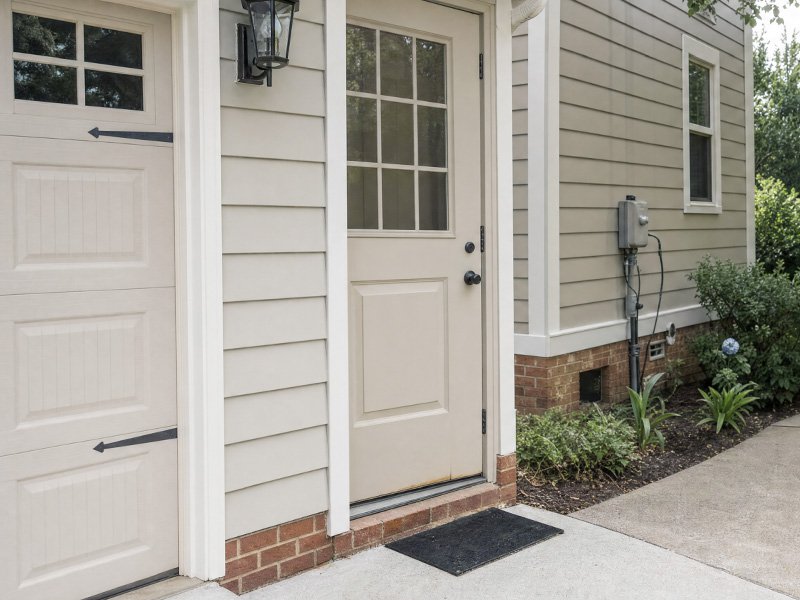
Garages and Carports
These are usually among the busiest spider areas during summer. Garages stay warm, provide plenty of hiding spots, and often attract insects after dark. We regularly find webs around ceiling corners, garage door frames, and shelving units.
Basements and Crawl Spaces
The cooler, damper air below ground level attracts insects, and spiders set up nearby along floor joists, corners, and openings where insects travel.
Around Windows and Exterior Doors
Insects are drawn to the light around windows and doors, especially in the evening. Spiders quickly learn where that activity occurs and build webs nearby.
Closets and Storage Areas
Boxes, bins, and stored belongings create quiet hiding places. These are common locations for black widow spiders, which prefer secluded spaces where they are unlikely to be disturbed.
Outdoor Living Areas
Decks, covered porches, patio furniture, and railings are all prime spider territory during summer. If you're finding webs in these areas, it's a good indication insects are active nearby.
If you're finding spiders throughout multiple areas of your home, that often points to a larger insect issue around the property. Give Four Seasons Pest Control a call, and we'll help identify what's attracting them.
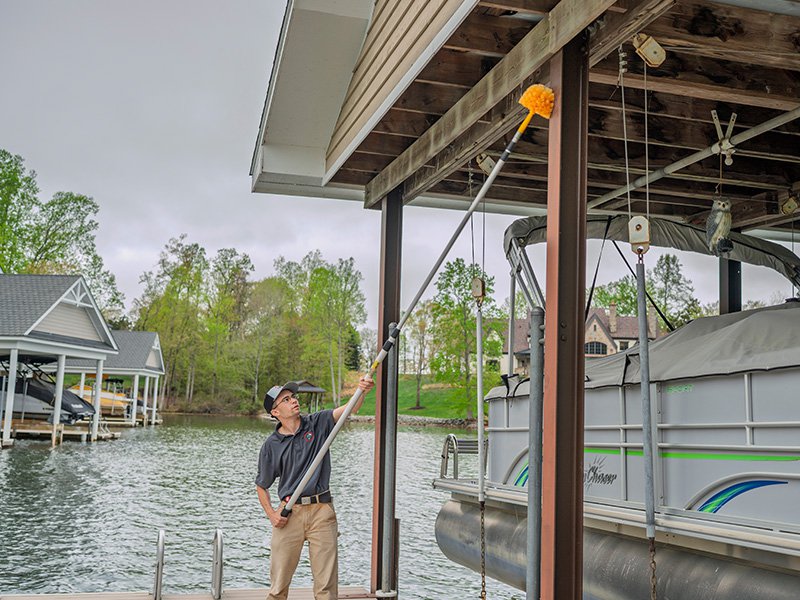
Docks, Boathouses, and Boat Lifts
Around Smith Mountain Lake and other waterfront properties, arachnids frequently build webs around dock railings, boathouse corners, boat lifts, and outdoor lighting. Insects are naturally drawn to the water and lights after sunset, creating ideal hunting grounds for spiders. Homeowners often notice webbing in these areas throughout the summer, especially in spots that don't see daily activity.
Is That a Black Widow?
Most spiders you'll encounter around the home are harmless. However, black widows are the one venomous spider homeowners in Virginia and North Carolina should be familiar with.
Black widows are shiny black with a distinctive red hourglass marking on the underside of the abdomen. They commonly hide in garages, sheds, woodpiles, meter boxes, outdoor storage containers, and other dark, undisturbed locations.
During summer, they're more active and more likely to be discovered when someone reaches into a storage area, picks up gloves, or moves boxes that have been sitting untouched.
If you think you've spotted a black widow, it's best not to handle the situation yourself. Contact Four Seasons Pest Control, and we'll inspect the area and address the problem safely. For more information, visit our black widow identification page.
The Spiders You're Most Likely to See
While black widows receive the most attention, they're far from the most common spiders found around homes.
House spiders are responsible for many of the webs found in upper corners, around light fixtures, and along window frames. They're small, brownish, and build irregular webs that often collect dust over time. While they aren't dangerous, frequent webbing is usually a sign that insects are active nearby.
Wolf spiders are the large, fast-moving spiders that often surprise homeowners. Unlike house spiders, they don't build webs. Instead, they actively hunt insects on the ground. You'll typically spot them running across floors, patios, garages, or walls, especially at night.
Wolf spiders commonly appear in basements, garages, and first-floor living areas during the summer months.
Both species are indicators that insects are available as a food source around your property.
Why Year-Round Pest Control Is the Best Spider Prevention
Targeting spiders alone isn't usually the most effective approach. Spiders don't groom themselves the way ants and cockroaches do, so they don't readily pick up treatments designed for other pests.
The more effective strategy is to reduce the insect population that attracts them.
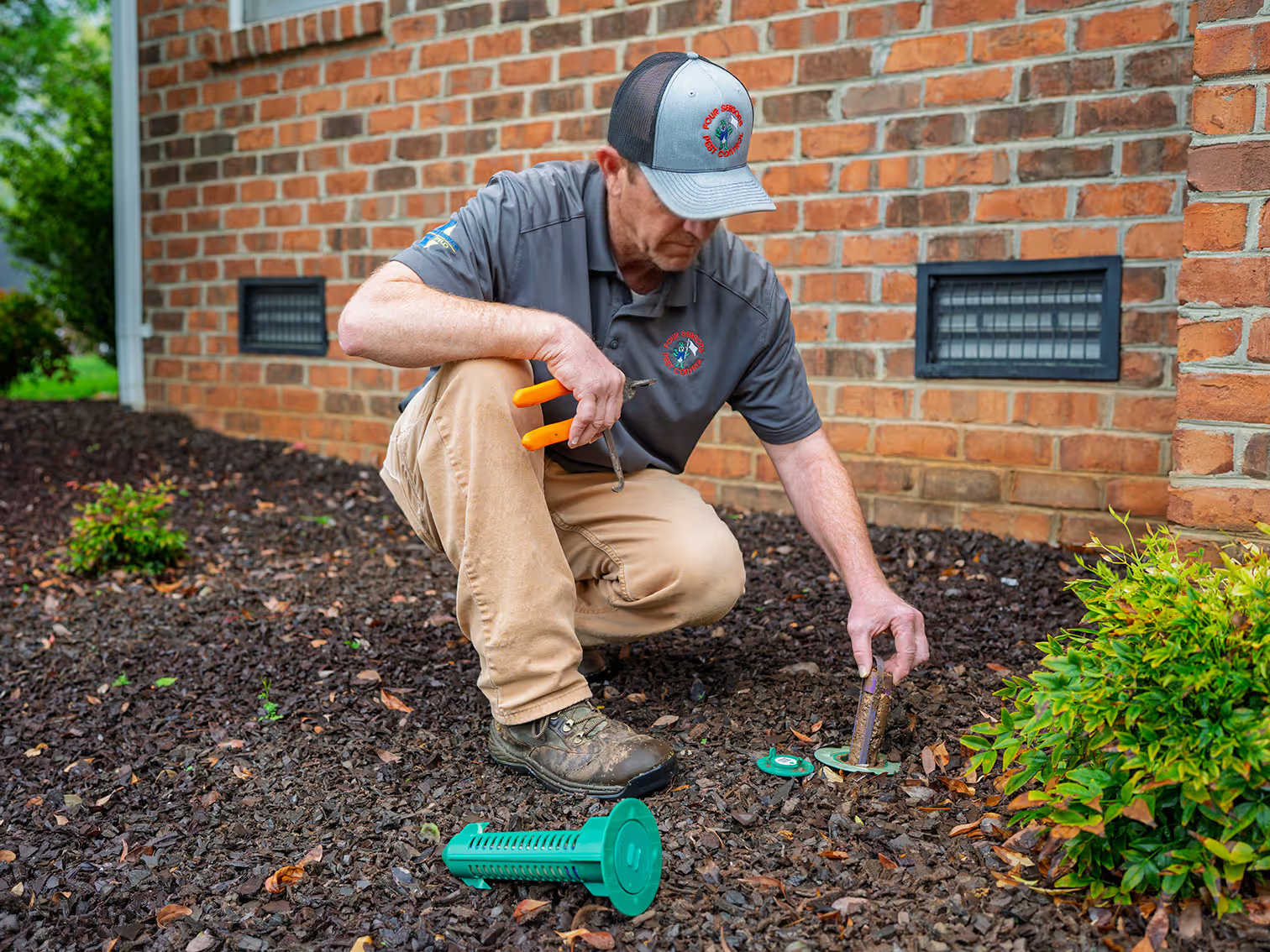
That's where ongoing pest control makes the biggest difference. Four Seasons' home pest control plans include regular exterior perimeter treatments that help reduce insect activity around your home. Fewer insects mean fewer food sources for spiders and fewer reasons for them to settle indoors.
Every routine visit also includes spider web removal around the exterior of the home. Our technicians remove webs from eaves, doorways, window frames, and other common spider hotspots.
We've been helping homeowners across Danville, Smith Mountain Lake, Reidsville, Greensboro, South Boston, and surrounding communities since 1998. Our team understands the seasonal pest pressures local homeowners face and what it takes to keep spider activity under control.
Already Dealing With Spiders? Four Seasons Can Help
If spiders have already moved in, you don't have to wait for your next scheduled service. Contact Four Seasons Pest Control, and we'll inspect the situation, identify what's attracting them, and recommend the best solution for your home.
Whether you're looking to prevent spider problems before they start or need help getting an existing issue under control, our team is ready to help.
Frequently Asked Questions About Summer Spider Activity
Do spiders lay eggs inside homes?
Yes. Female spiders may lay egg sacs in undisturbed locations such as garages, attics, closets, crawl spaces, and behind furniture. Depending on the species, a single egg sac can contain dozens or even hundreds of eggs.
Can a spider bite make you sick?
Most spider bites in Virginia and North Carolina are mild and cause minor irritation. Black widow bites are the exception and can cause muscle pain, cramping, and other symptoms that require medical attention.
Are spiders more active at night?
Many species are. House spiders and wolf spiders often do most of their hunting after dark, which is why homeowners frequently notice them in the evening.
Do spiders come inside because of rain?
Heavy summer storms can temporarily drive insects and spiders into garages, sheds, and other sheltered areas. Many homeowners notice an increase in activity after extended periods of rain when outdoor hiding spots become saturated.
Can spiders damage a home?
No. Unlike termites or rodents, spiders do not damage wood, insulation, wiring, or other structural materials. Their presence is usually more of a nuisance issue and often signals that insects are active around the property.
Keep Spiders Out of Your Home With Four Seasons Pest Control
Whether it's black widows in the garage or house spiders building webs around your home, Four Seasons Pest Control has the experience and local knowledge to help.
Give us a call or contact us online to schedule an inspection and learn more about our home pest control plans.